

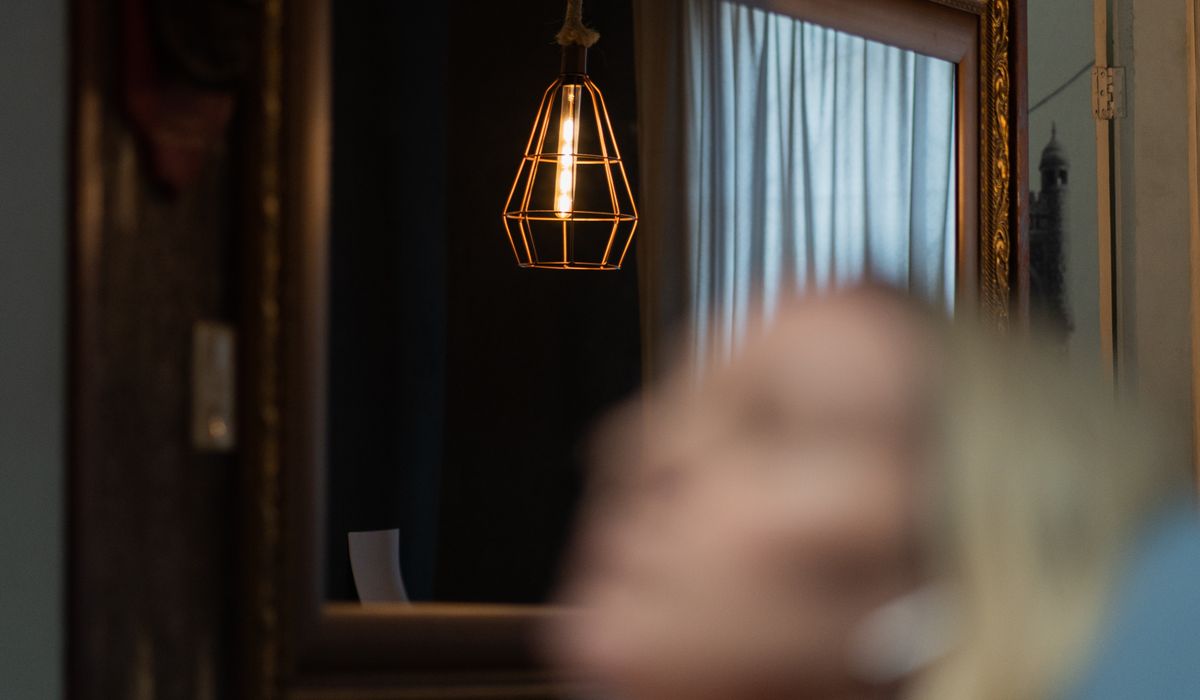
Why a gilded mirror earns its place in a narrow hallway
Narrow hallways are the unsung heroes of British homes. They usher you in from the cold, hold coats and keys, and often set the first impression of your interior. Yet they are frequently dark, cramped and overlooked. A gilded mirror is one of the most generous additions you can make. Its frame catches even the faintest light, while the glass reflects whatever is opposite, creating the illusion of a wider, brighter space. In a Victorian terrace or a cottage with a slim passage, a gilded mirror brings a touch of vintage glamour without demanding precious floor space.
The golden rule: hang it opposite a window
If you take one thing from this article, let it be this: position your gilded mirror on the wall that directly faces a window. A mirror reflects light, not creates it, so it needs a source to bounce. When it faces a window, it doubles the daylight entering your hallway, making the space feel almost twice as bright. It also reflects the view outside—greenery, sky, or a neighbouring brick wall—adding depth and interest.
In a typical narrow hallway, the window might be at the far end or on one side. If it is at the end, hang the mirror on the wall opposite that window, even if that means the mirror sits above a console table. If the window is on one side, place the mirror on the opposite wall, centred with the window for the best symmetry. If your hallway has no window at all, hang the mirror opposite a lamp, a light-coloured wall, or even a doorway into a bright room. Avoid facing a dark cupboard or a cluttered coat rack—you will only reflect the gloom.
Getting the height and proportions right
Scale matters in a narrow space. A mirror that is too large will overwhelm; too small and it will look lost. As a guide, the mirror width should be roughly two-thirds to three-quarters the width of whatever sits beneath it, such as a console table. If you are hanging it alone on a wall, keep the mirror no wider than 60–70cm in a hallway that is 1–1.2 metres wide.
For height, the centre of the mirror should sit at eye level—around 1.5 to 1.6 metres from the floor. This is comfortable for checking your reflection as you leave. If you have a console table, leave 15–25cm between the tabletop and the bottom of the frame. For a tall, arched mirror, the bottom edge can be 30–45cm from the floor, which draws the eye upwards and makes the ceiling feel higher.
- Use two hooks rather than one for stability, especially on plasterboard walls.
- Check the reflection before you commit: stand where you would naturally pause and see what the mirror shows.
- Consider an arched or oval shape to soften the hard lines of a narrow hallway.
Styling beneath and around the mirror
A gilded mirror does not need much company. In fact, the more you crowd it, the less effective its light-bouncing magic becomes. A slim console table—no deeper than 30–35cm—is ideal. Look for a half-moon shape, a narrow vintage bench, or a simple wall-mounted shelf. On top, add a small lamp with a warm bulb, a single bud vase, and a shallow bowl for keys. Keep tall objects away from the centre of the mirror so the reflection stays clear.
Lighting is your secret weapon. A pair of wall sconces either side of the mirror, or a picture light above it, will highlight the gilded frame and add a soft glow. Vintage touches work beautifully: brass hooks for coats, an umbrella stand, a runner rug in natural fibres. A runner should be 60–70cm wide, leaving 10–15cm of floor visible on each side—this makes the hallway feel wider, not narrower.
Colour, texture and vintage details
Gilded frames are warm and forgiving. They look wonderful against soft off-whites, muted sage greens, and earthy pinks, which keep a narrow hallway feeling light. If you prefer a dramatic look, deep green or navy can make the gilt pop, but be careful in a dark hallway—you may lose the sense of space. A mid-tone is often the sweet spot.
Add texture to stop the space feeling flat: a linen lampshade, a velvet cushion on a bench, a sisal runner underfoot. Vintage styling thrives on mixing eras—a foxed mirror glass with a carved frame, a brass hook with an iron radiator, a chipped enamel bowl with a crystal vase. Do not worry about perfection. A little patina and wear adds character. Just avoid too many patterns or colours; in a small space, restraint reads as elegance.
Caring for a gilded mirror in a busy hallway
Hallways are high-traffic areas, so your mirror will collect dust and fingerprints. Dust the frame gently with a soft, dry brush—never use a wet cloth on gilded wood, as it can lift the gold leaf. For the glass, use a microfibre cloth and a little diluted white vinegar or a spirit-based cleaner sprayed onto the cloth, not the frame. Keep the mirror away from damp and direct heat, which can cause the gilding to flake.
Finally, make sure it is secure. Gilded mirrors can be heavy. Fix into a stud or use appropriate plasterboard anchors, and check the hooks twice a year. In a narrow hallway, a well-placed mirror is not just decoration; it is a practical, beautiful solution that makes every entrance feel more generous. With the right position and a light touch, your gilded mirror will earn its place for years to come.





John Doe
14 January, 2022Having no content in post should have adverse..
Chauffina Carr
10 April, 2022We use these tests all time! Killer stuff!
Jim Séchen
16 July, 2022Thanks for all the comments, everyone!