


Start by Measuring the Corner, Not the Room
A reading nook does not need a spare room. It needs roughly a square metre of floor that nobody else is using: the corner beside a chimney breast, the dead space at the end of a hallway, the alcove that never quite took a sofa. Before you buy anything, measure that patch properly. Allow at least 90cm by 90cm for a chair facing out, or 80cm by 80cm if you angle the chair across the corner — which is nearly always the smarter move in a compact flat.
Then look at what is already there. A radiator under the window rules out summer reading. A door that swings inward rules out a whole wall. Note where daylight falls through the day, because the best spot at nine in the morning is often the gloomiest at four.
Choosing an Armchair That Fits a Small Flat
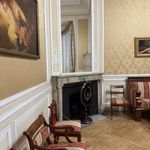
The chair is the anchor, and in a small flat it has to earn its footprint. Look for a seat width under 70cm and a frame with visible legs; legs let floor and light show underneath and make a chair feel half its size. A slim mid-century armchair, a slipper chair or a vintage bedroom chair all work well. Deep wing chairs and bulky recliners swallow a corner whole.
Check the seat height and depth before you commit. If your feet do not rest flat on the floor, no cushion will fix it. Measure your stairwell and doorways, too — a narrow Victorian doorway has defeated many a bargain, so removable legs are your friend.
Second-hand is where the character lives. A tired armchair from a charity shop or a local auction can be re-covered with a well-fitted throw, and an older wooden frame will usually outlast anything flat-packed.
Lighting: The Difference Between a Nook and a Corner
An unlit corner is just a corner. A wall-mounted reading light is the single most effective addition you can make: it frees the floor and the table, and throws light onto the page rather than over your shoulder. Mount it at roughly shoulder height when seated — about 1.2 to 1.4 metres from the floor — and choose a shade that directs light downwards. A warm bulb, 2700K and around 400 lumens, is plenty. Anything brighter turns a cosy corner into a waiting room.
If you rent and cannot drill, a plug-in wall light with a fabric-covered flex does the same job, and a slim floor lamp angled over the chair's shoulder is a fine second choice. Avoid relying on the ceiling light alone; overhead light flattens a small room and puts the glare in the wrong place.
The Side Table and What Goes On It
Keep it small. A table roughly 40cm across is ample for a mug, a book and a pair of glasses; anything larger becomes a dumping ground. Nesting tables, a vintage stool, a plant stand, or a low stack of hardbacks with a tray on top all do the job. If floor space is genuinely tight, a wall-hung shelf at elbow height costs nothing in footprint.
- Put it on your dominant side, within reach without sitting up.
- Leave the surface mostly empty — clutter reads as mess in a small space.
- Add a small basket or lidded box underneath for what you want out of sight.
Layering Vintage Textiles for Warmth
Cosiness in a British flat is mostly a textile question. Start with a rug — a small wool rug, a kilim runner, or an offcut bound at the edges — because it softens the floor and marks out the nook without a single wall. Layer a wool or lambswool throw over the back of the chair, and keep cushions in contrasting textures: velvet against linen, tweed against cotton.
Colour matters. Deeper tones used in one small area feel enveloping rather than oppressive, provided the surrounding walls stay light. A corner painted in soft olive, dusty rose or warm inky blue makes the chair feel tucked in. Bring in vintage pieces with a bit of history: an old brass picture light, a hand-thrown mug, a side table with a ring mark or two. Perfection is not the goal; warmth is.
Defining the Space Without Walls
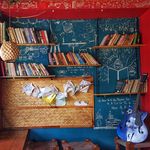
The trick that makes a nook feel like a room is the boundary. A rug does part of the work. A tall bookcase turned at right angles to the wall does the rest, and stores the books as well. A folding screen or a curtain on a track can shut the nook off when you want quiet and open it up again when guests arrive.
Angle the chair slightly rather than pushing it flat against the wall. It takes no more room, it looks more relaxed, and it stops the corner reading like a punished child's chair. Add a plant, a small lamp, a framed print at eye level — then stop. The best reading nooks in small flats are not the ones with the most in them, but the ones where everything within arm's reach is exactly what you need.




John Doe
14 January, 2022Having no content in post should have adverse..
Chauffina Carr
10 April, 2022We use these tests all time! Killer stuff!
Jim Séchen
16 July, 2022Thanks for all the comments, everyone!