


Dark cottage living rooms are often treated as a problem to be solved: too little light, too many beams, too small a window. Yet these rooms have a quality that bright, modern spaces struggle to imitate — warmth, intimacy and a genuine sense of shelter. Rather than fighting the gloom, work with it. Layer warm light, choose fabrics that hold their colour in low light, and place one generous mirror where it can do the most work. The result is a living room that feels atmospheric rather than dingy.
Work With the Dark, Not Against It
The instinct with a dim room is to flood it with brilliant white and hope the effect is airy. In a cottage, this usually backfires. Brilliant white goes grey in low light, and cool-toned bulbs make timber and stone look drab and slightly unwell. Treat the room instead as a snug — a space designed for evenings, reading and long conversations.
A warm, mid-depth palette will always flatter a dark room. Think clay pinks, ochre, olive, faded rose, deep green, earthy browns and soft charcoal. These colours absorb what light there is and give it back as glow. Paint the ceiling the same colour as the walls to blur the edges of the room, and keep the woodwork slightly warmer than the walls rather than starkly white. If you have original beams, let them be dark; they add character rather than taking light away.
Layered Lighting Beats One Bright Ceiling Light
A single pendant in the centre of a low ceiling will always disappoint: it lights the middle of the floor and leaves the corners in shadow. Build up light in layers instead, so the eye has several gentle pools to move between.
- Choose bulbs around 2700K — warm white — and avoid anything described as daylight or cool white.
- Aim for at least three separate sources: a table lamp on a side table, a slim floor lamp tucked behind an armchair, and a wall light beside the sofa.
- Use a dimmer on the main light so it can drop to a low glow after dark.
- Add one very low source near the hearth — a small lamp on the floor or a cluster of candles on a tray.
Shade choice matters as much as bulb choice. Opaque or linen shades push light down onto surfaces; clear glass shades scatter it uselessly. Brass and aged metal fittings sit comfortably with cottage architecture and only improve as they dull.
Rich Fabrics and Texture
In a dark room, texture does the work that colour does elsewhere. Flat, smooth surfaces vanish into the shadows; woven, brushed and napped fabrics catch what light there is and hold it.
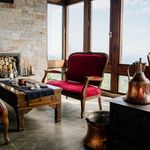
Velvet is superb in a cottage sitting room, particularly in muted tones such as slate blue, moss or antique gold. Wool throws, heavy linen, brushed cotton and chunky knits all add depth. Layer a patterned kilim or a faded Persian rug over a flagstone or bare board floor — it warms the room acoustically as well as visually, which matters in a space with hard surfaces.
Curtains should be full-length and lined, hung as close to the ceiling as the room allows and wider than the window so they can be pulled clear of the glass in the day. If your windows are small, avoid heavy pelmets that steal more light; a simple Roman blind in a natural fabric often suits a cottage better.
Place a Large Mirror Where It Earns Its Keep
A single generous mirror will do more for a dark cottage living room than a dozen small decorative ones. The trick is placement. Hang or lean it opposite the main window, not above the fireplace — mantel mirrors mostly reflect the ceiling and the backs of heads.
Position it so it catches a lamp as well as daylight: a mirror that bounces the glow of a table lamp into the darker half of the room effectively doubles your lighting after dark. Aged or slightly foxed glass suits a vintage interior far better than a flawless modern sheet, and it softens the reflection rather than making the room look like a showroom.
If you cannot fit one large mirror, use a pair of tall, narrow ones facing each other on adjoining walls to suggest depth. Always secure a leaning mirror to the wall, especially in a house with uneven floors.
Furniture That Suits Cottage Proportions
Low ceilings and small windows call for furniture with a light footprint. Chunky three-piece suites will swallow a cottage room whole. Choose instead slim armchairs with exposed legs, a low sofa with a visible frame, or a wooden bench along one wall.
- Keep a clear route through the room; in small spaces, floor you can see reads as space you have.
- Use a round or oval coffee table to soften tight corners and ease movement around it.
- Pick an ottoman or blanket box that stores throws, magazines and the things that otherwise clutter surfaces.
- Choose furniture in mid-tone woods — oak, elm, fruitwood — which sit better in shadow than pale Scandi pine.
Vintage Details That Earn Their Place
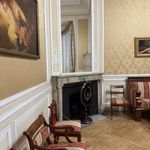
Finally, style the room with objects that reward close looking: aged brass candlesticks, a battered leather club chair, a stack of clothbound books, stoneware jugs, a small oil painting in a dark frame hung slightly lower than you think it should be. Charity shops, auction rooms and car boot sales remain the best sources, and one good piece beats five indifferent ones.
Keep surfaces relatively clear so that lamplight has something to fall on, and let the corners stay a little shadowed. A dark cottage living room is not a failure of light; it is an invitation to slow down, close the curtains and settle in.




John Doe
14 January, 2022Having no content in post should have adverse..
Chauffina Carr
10 April, 2022We use these tests all time! Killer stuff!
Jim Séchen
16 July, 2022Thanks for all the comments, everyone!